

Key Thermal & Dexterity Standards
Navigating extreme freezing temperatures requires a dual-layer strategy: an impervious wind-and-waterproof shell coupled with high-loft synthetic insulation. Multi-finger articulation and moisture-wicking fleece linings prevent cold sweat accumulation while maintaining tool control.
Anatomy of Sub-Zero Handwear: Insulation & Shell Technology
When ambient temperatures drop below minus twenty degrees Celsius, peripheral blood circulation slows drastically, leaving fingers vulnerable to rapid numbness and frostbite. Effective cold-weather gloves prevent this through dense micro-fiber insulation matrices that trap warm air pockets without absorbing exterior moisture or body sweat.
Modern cold-weather handwear integrates multi-tier membrane systems. Heavyweight outer fabrics like reinforced ripstop nylon or treated goatskin deflect biting winds and abrasions, while breathable intermediate membranes release internal vapor before it can condense into freezing moisture.
"The greatest misconception in freezing climates is prioritizing bulk over breathable wind resistance. Even minimal moisture trapped inside a glove will chill your hands faster than the outside air."
Essential Criteria for Sub-Zero Reliability
-
01
Gram Weight Insulation Density Opt for 100g to 200g of high-efficiency synthetic fill across the back of the hand, paired with 60g to 80g along the palms to preserve vital grip feel and dexterity.
-
02
Gauntlet Cuffs with Cinch Closures Extended cuffs that overlap jacket sleeves prevent snow infiltration and seal heat around the wrist pulse points, reducing systemic thermal loss.
-
03
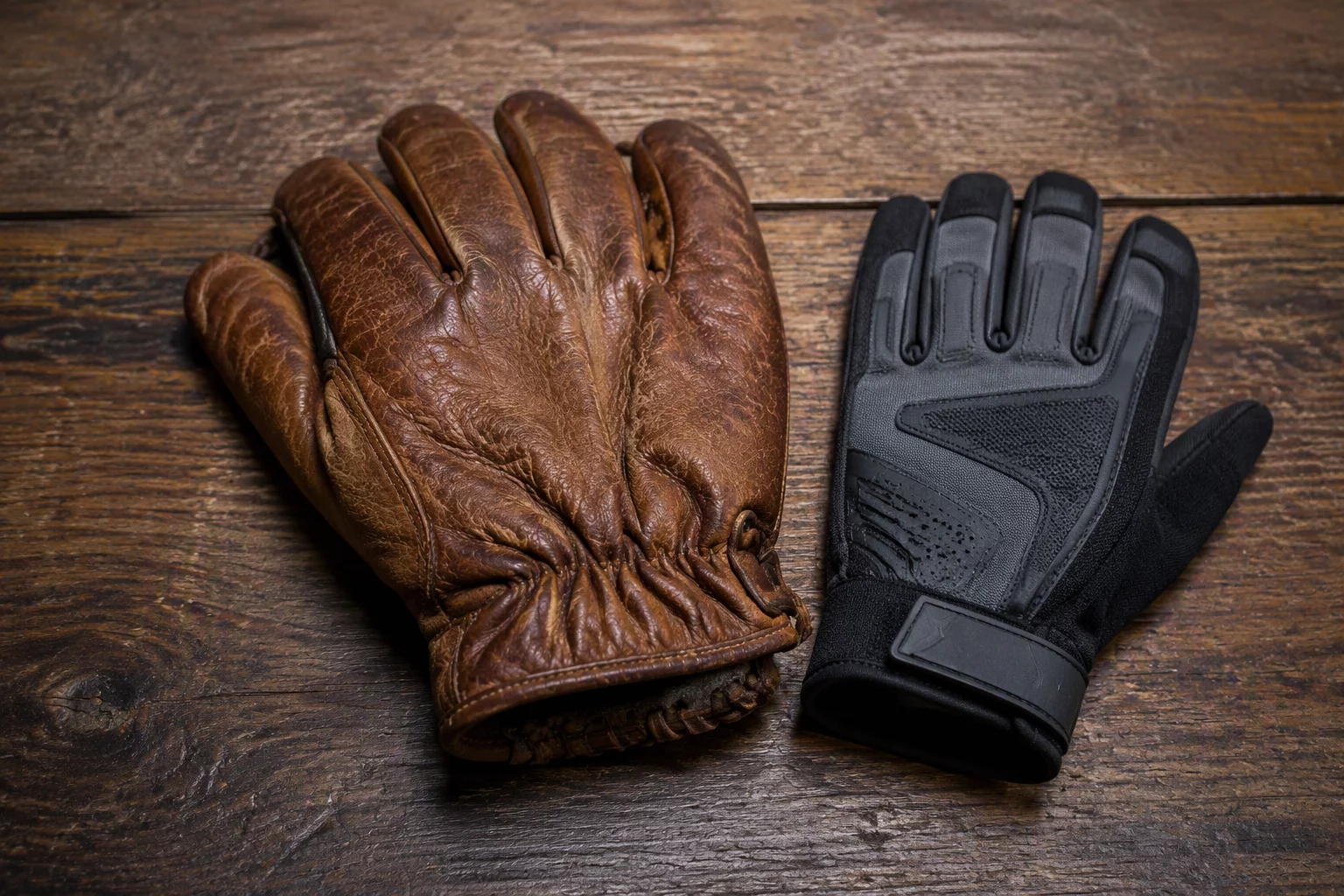
Reinforced Touchpoint Leather Treated deerskin or textured goat leather on high-wear palm and finger areas ensures confident tool manipulation even when handling freezing metal surfaces.
Choosing Between Mittens, Lobster Claws, and 5-Finger Gloves
Mittens remain undefeated for pure thermal retention because grouped fingers share warmth within a single chamber. However, tasks requiring fine dexterity, operating machinery switches, or managing vehicle tie-downs demand articulated five-finger gloves or 3-finger lobster designs.
For prolonged exposure during static tasks like winter commuting or heavy machinery operation, pairing a slim merino wool liner glove with an insulated weatherproof outer gauntlet offers the best balance of warmth, adaptability, and moisture regulation.

Reader Feedback & Reviews
Share your hands-on experience or ask our gear specialists.
Alex
Verified ReaderGreat read, very helpful! The explanation regarding insulation density on the palm versus the back of the hand completely changed how I pick gloves for winter work.
Emma Watson
Brand SpecialistThanks Alex! Keeping palm bulk minimal is essential for safe tool operation in freezing weather. Glad it helped!
Leave Your Thoughts
Your email address will not be published. Required fields are marked *