
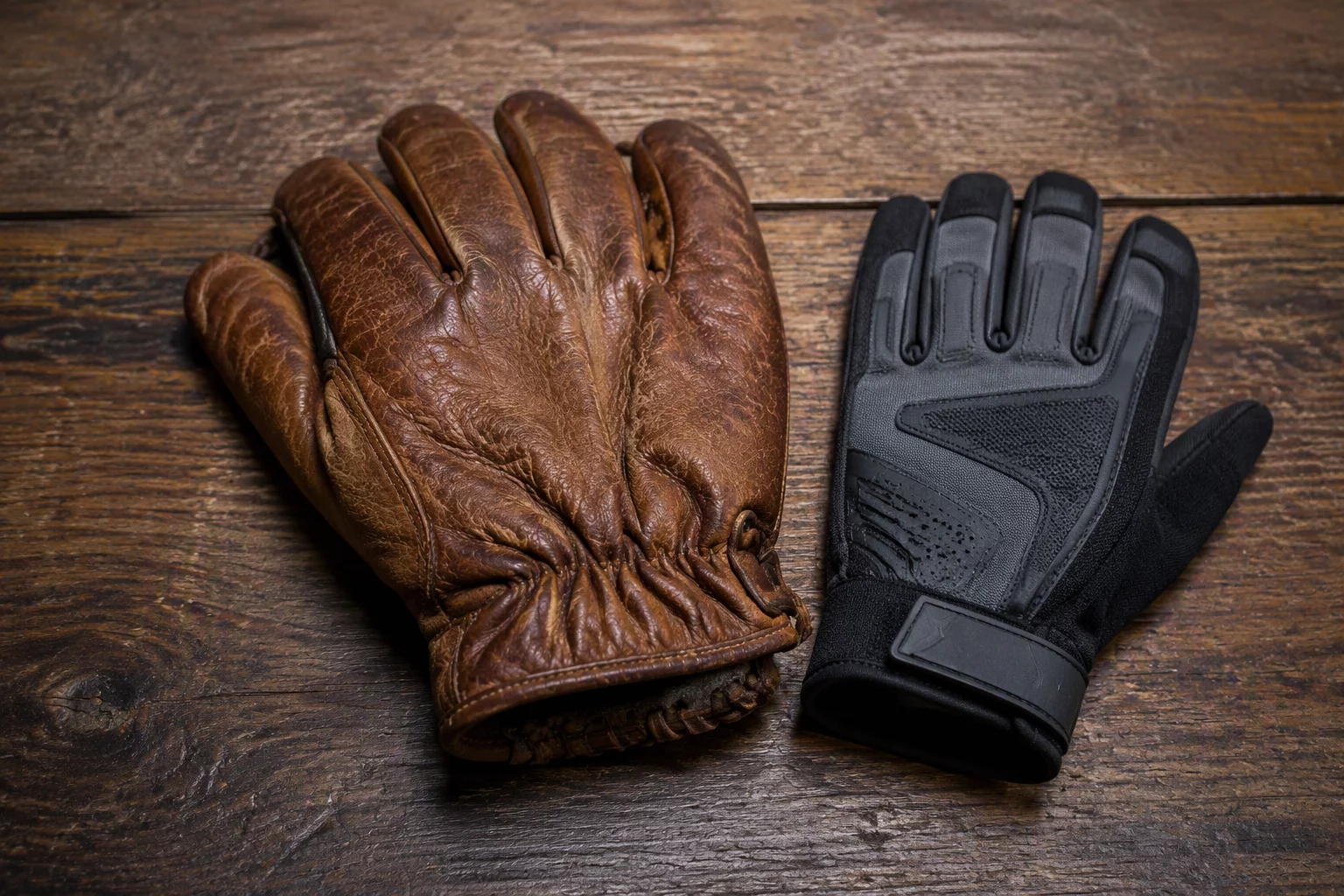
Choosing Between Traditional Hide and Modern Engineered Polymers
Natural leather provides unbeatable abrasion resistance, tactile feel, and custom-mold comfort over time. Modern synthetics excel in wet climates, dry faster, offer built-in touchscreen compatibility, and require minimal upkeep.
Natural Leather: Unmatched Durability and Custom Mold
Full-grain cowhide, deerskin, and goatskin have served as the benchmark for heavy-duty hand protection and steering control for over a century. Leather fibers naturally interlock in dense microscopic bundles, giving genuine hide an innate resistance to friction, punctures, and mechanical wear that few single-layer fabrics can match. With continuous use, the warmth and pressure of your hand shape the leather, creating an ergonomic second-skin fit.
However, natural hides require routine nourishment with conditioning creams to avoid stiffening when exposed to moisture and road grime. In dry working conditions, classic automotive touring, welding, and structural trades, the tactile feedback of natural hide remains unrivaled.
"Leather molds to your hands like a second skin, while high-grade synthetics keep you dry when the storm hits."
Key Performance Metrics Compared
-
01
Abrasion & Heat Resistance Natural cowhide and goatskin resist sustained surface friction and high contact heat far better than standard synthetic textiles.
-
02
Moisture Management & Quick Drying Engineered synthetic membranes and neoprene shed external rain instantly, wicking internal moisture away and drying in hours rather than days.
-
03
Maintenance & Care Convenience Synthetic handwear handles regular washing machine cycles with mild detergent, whereas leather demands specialized gentle conditioning.
Synthetic Materials: All-Weather Utility and Zero Break-In
Modern engineered textiles combine nylon shells, polyurethane coatings, and polar fleece linings to deliver instant flexibility. Unlike stiff new leather, synthetic gloves require zero break-in time before tackling intense daily activities. Conductive fibers woven into the index fingers allow seamless touch interactions on mobile phones and vehicle touchscreens without exposing bare skin to freezing wind.
For wet winter commutes, mountain trekking, and fast-paced sports where gloves frequently encounter snow or mud, synthetic compositions offer superior water resistance, lighter overall weight, and straightforward laundering.


Reader Feedback & Reviews
Share your hands-on experience or ask our gear specialists.
No comments yet. This could be your first comment.
Leave Your Thoughts
Your email address will not be published. Required fields are marked *