
Essential Rules for Washing Synthetic Materials
Synthetic fabrics like nylon, polyester, and elastane blend with nitrile or polyurethane coatings require cool water and mild detergents. Intense heat from dryers or direct radiators quickly breaks down polymer bonding and weakens elastic stretch.
Hand Washing vs Machine Cycle: Choosing the Right Method
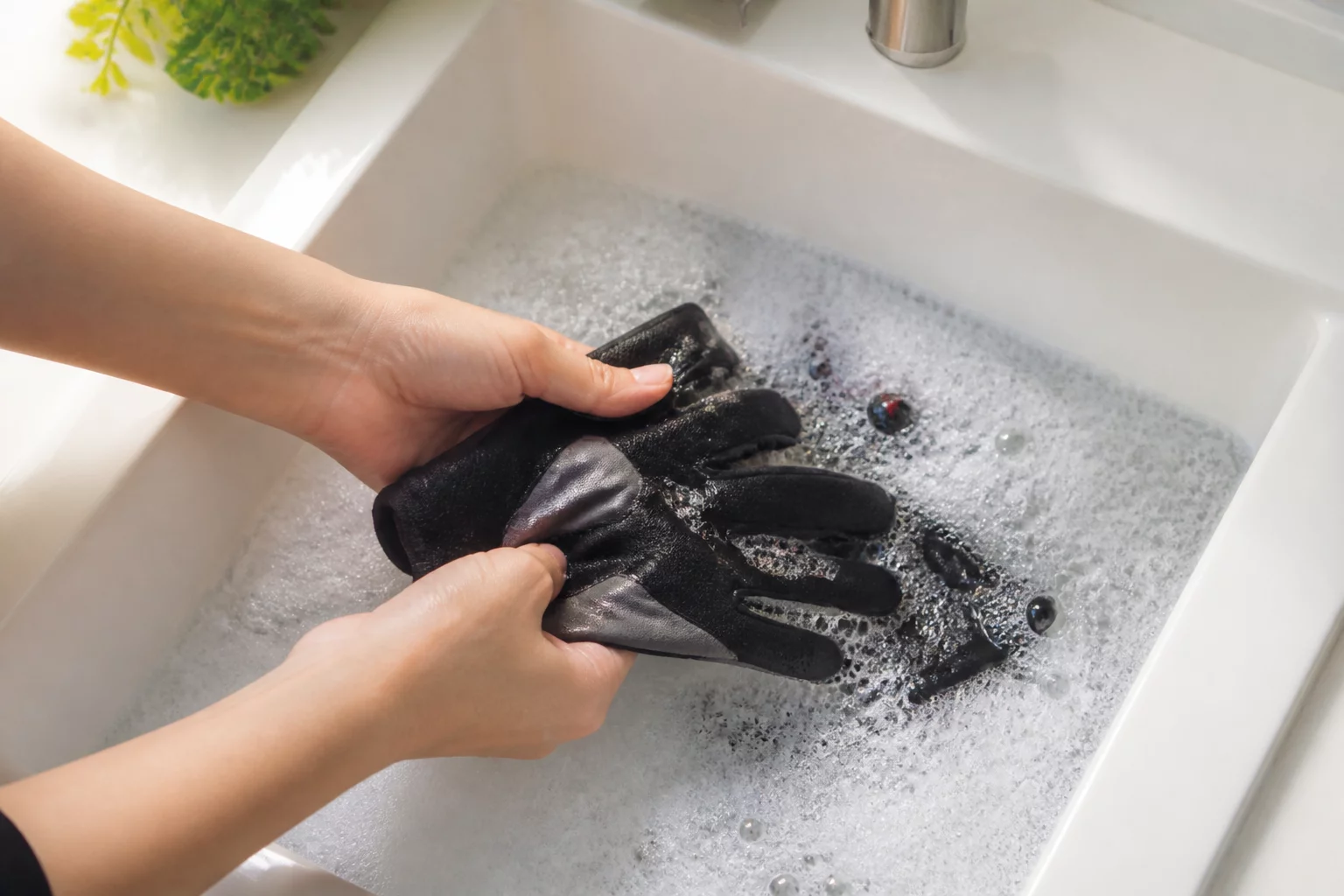
Synthetic work and athletic gloves handle dirt and sweat effectively, yet routine maintenance determines how long their grip surfaces stay pliable. Hand washing remains the safest approach for gloves with nitrile, polyurethane, or silicone coatings. Fill a basin with lukewarm water around 30°C, dissolve a teaspoon of mild liquid detergent, and gently submerge the gloves to loosen trapped soil.
Heavy-duty mechanic gloves and fleece-lined winter synthetics can withstand a gentle washing machine cycle when placed inside a mesh wash bag. Always select a delicate wash with cold water and avoid heavy spin speeds that can twist seam stitching or separate internal thermal linings.
“Heat is the primary enemy of synthetic gloves. Air-drying at room temperature preserves nitrile and polyurethane coatings far longer than any heated dryer.”
Step-by-Step Cleaning Sequence
-
01
Pre-Rinse Surface Grime Rinse exterior mud, grease, or heavy debris under cold running water before soaking to prevent grime from penetrating interior linings.
-
02
Mild Detergent Soak Submerge gloves in soapy lukewarm water for 10 to 15 minutes, gently working the soapy solution through palm textures and finger seams.
-
03
Complete Air Drying Squeeze excess water gently without wringing or twisting, then hang gloves by the fingertips in a well-ventilated, shaded area.
Tackling Tough Stains and Eliminating Odors
Motor oil, tree sap, and grease require localized pre-treatment rather than aggressive chemical solvents. Applying a small drop of grease-cutting liquid dish soap directly to the affected palm coating helps lift stubborn residues without damaging underlying fabric fibers. Avoid chlorine bleach or solvent-based spot removers because they dissolve synthetic adhesives.
Trapped moisture often creates persistent odor in lined synthetic gloves. A diluted baking soda rinse or a gentle mixture of white vinegar and water neutralizes bacteria effectively. Ensure the internal lining dries completely before storing the pair in an enclosed toolbox or gear bag.
Reader Feedback & Reviews
Share your hands-on experience or ask our gear specialists.
No comments yet. Be the first to share your experience!
Leave Your Thoughts
Your email address will not be published. Required fields are marked *