
Quick Checklist for Flawless Seam Construction
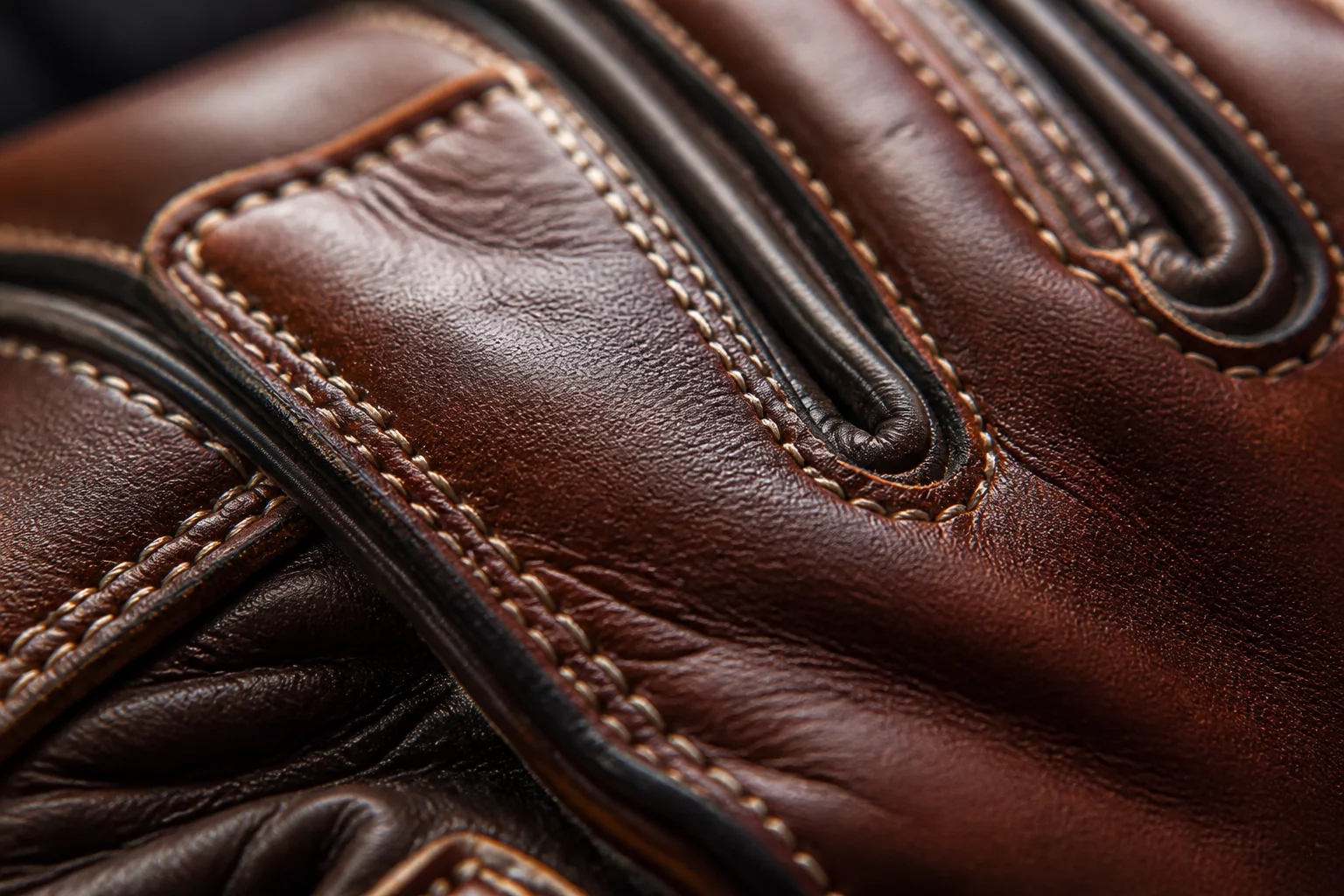
High-grade gloves showcase consistent stitch count (8-10 stitches per inch), heavy-duty bonded nylon or aramid thread, reinforced stress points at the fourchettes, and smooth internal seam allowances that eliminate skin friction.
Understanding Stitch Types: Inseam, Outseam, and Pique
The way glove panels meet dictates both tactile comfort and structural longevity. In traditional inseam gloves, seams stay tucked inside for a sleek, formal aesthetic, though poor execution can cause irritation along the finger sidewalls. Outseam construction leaves stitch ridges on the outside, a hallmark of motorsport and precision driving gloves where internal smoothness provides maximum tactile grip without pressure points.
Pique stitching bridges both worlds with overlapping leather edges and a delicate single-needle lockstitch. When examining high-performance workwear or luxury driving gloves, notice how cleanly the fourchettes—the narrow strips between fingers—align with the palm. Clean joints without bulky bunched edges indicate meticulous bench tailoring.
“The true benchmark of glove longevity is not merely the grade of leather, but the balance of thread elasticity and stitch tension across high-flex zones.”
Three Visual Markers of Handcrafted Durability
-
01
Stitch Density & Uniform Spacing Count the stitches per inch along the index finger seam. Premium gloves maintain 8 to 10 balanced stitches without erratic gaps, needle holes skipping, or uneven tension that gathers the hide.
-
02
Reinforced Thumb & Gusset Bar Tacks The thumb junction bears continuous rotational tension. Look for double-stitched backtacks or inset keystones that prevent seam separation during heavy gripping.
-
03
Thread Material & Tensile Strength Substandard cotton threads degrade quickly with moisture and sweat. Quality handwear utilizes bonded polyester, waxed nylon, or cut-resistant Kevlar threads designed to outlive the outer shell.
Testing Seam Elasticity and Tension in the Real World
Before making a purchase, gently tug the finger seams laterally. Quality construction gives slightly with the natural stretch of the leather grain without revealing white thread loops or exposed needle punctures. If the seams gap open or the thread looks taut to the point of biting through the leather, the tension was set improperly on the stitching machine.
Inspect the cuff hem and palm reinforcement patches. Lockstitches should terminate with tidy reverse backstitches or cleanly tied interior knots rather than glued threads that unravel after a few weeks of active wear.

Reader Feedback & Reviews
Share your hands-on experience or ask our gear specialists.
Leave Your Thoughts
Your email address will not be published. Required fields are marked *