
Why Millimeters Matter in Glove Sizing
A glove that is too tight restricts blood circulation and induces rapid hand fatigue, while an oversized glove compromises grip control and tactile dexterity. Measuring both hand circumference and total hand length ensures an optimal balance between mobility and comfort across work, driving, and winter styles.
Two Essential Measurements: Circumference and Length
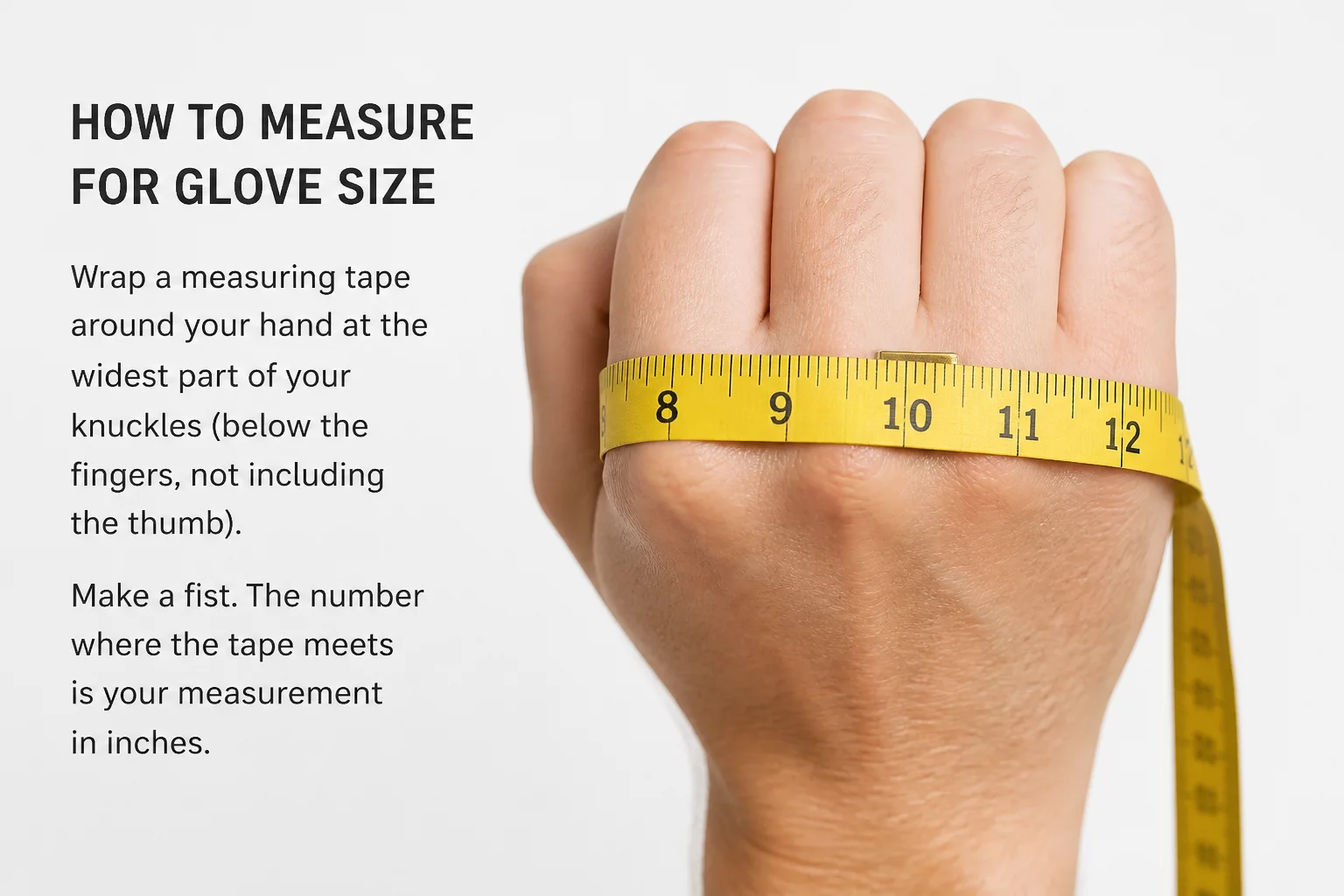
Finding your correct glove size requires two straightforward measurements using a flexible tailor measuring tape. Begin by wrapping the measuring tape around the widest part of your dominant hand, positioned right across the knuckles excluding the thumb. Keep your fingers extended and relaxed without clenching a fist. Note this circumference measurement in both inches and centimeters.
The second critical measurement is total hand length. Place the start of the tape at the base crease of your palm where your wrist begins, then measure straight up along your middle finger to the very tip. If your measurements fall between standard sizes, consider the glove material: supple unlined leather will stretch slightly with wear, whereas heavily insulated winter mittens or laminated waterproof gloves require rounding up for thermal loft.
"When in doubt between two sizes for lined winter gloves or tactical gear, always choose the larger size to maintain proper insulation and flexible finger articulation."
Three Steps to a Flawless Fit
-
01
Measure Your Dominant Hand Your dominant hand is naturally slightly larger than your non-dominant hand due to muscle density and frequent use. Always use measurements from your dominant hand to avoid selecting a constrictive size.
-
02
Factor in Lining and Insulation Unlined leather driving gloves should fit snug initially as the leather relaxes. Thermal gloves with fleece or Thinsulate padding require at least a few millimeters of extra breathing room.
-
03
Verify Finger Crotch Alignment A properly fitted glove should seat snugly between the web of your fingers without pulling taut across the knuckles when you close your fist around a tool or steering wheel.
Sizing Differences Across Driving, Work, and Winter Gloves
Different glove styles serve distinct functional purposes, which influences how they should sit on your hand. Driving gloves require a second-skin feel to give maximum tactile feedback on the steering wheel, meaning initial firmness across the palm will mold to your contours within days of wear. Heavy-duty leather work gloves require reinforced seam clearance so that rigorous flexing does not pinch pressure points.
For extreme winter gear, trapped air acts as the primary insulator. If a thermal mitten or snow glove fits too snugly against the fingertips, the compressed insulation loses its heat retention efficiency, leaving fingertips cold. Always cross-reference your measurements with our size charts before placing an order.
Reader Feedback & Reviews
Share your hands-on experience or ask our gear specialists.
Leave Your Thoughts
Your email address will not be published. Required fields are marked *